
Livonia, MI: (Note some reference links added, including corporate Blogs.) In Michigan No‑Fault injury cases—especially those involving traumatic brain injury (TBI) and spinal cord injury (SCI)—accurate characterization of medically necessary services is not just important; it is foundational to patient safety, statutory compliance, and fair reimbursement. Unfortunately, a persistent problem has emerged: insurers misapplying the ACOEM Guidelines to justify denial or reduction of services that ACOEM was never designed to regulate.
Michigan’s No‑Fault Act, MCL 500.3107, requires insurers to pay all reasonable and necessary expenses for an injured person’s care, recovery, or rehabilitation. This statutory obligation explicitly includes supports such as Attendant Care (S5125) and Residential Rehabilitation (T2033) for individuals whose injuries prevent independent living or safe community functioning. The Michigan Court of Appeals has reinforced this principle, emphasizing that insurers cannot arbitrarily deny benefits without evidence that services are unnecessary or unrelated to the accident. [electronic…rvices.com]
Yet, some insurers attempt to apply ACOEM—guidelines geared toward occupational injuries, short‑term clinical interventions, and return‑to‑work treatment trajectories—to long‑term support services. ACOEM does not govern custodial, supervisory, cognitive‑support, or daily‑living assistance needs. Its scope simply does not align with the realities of post‑acute TBI/SCI survivorship.
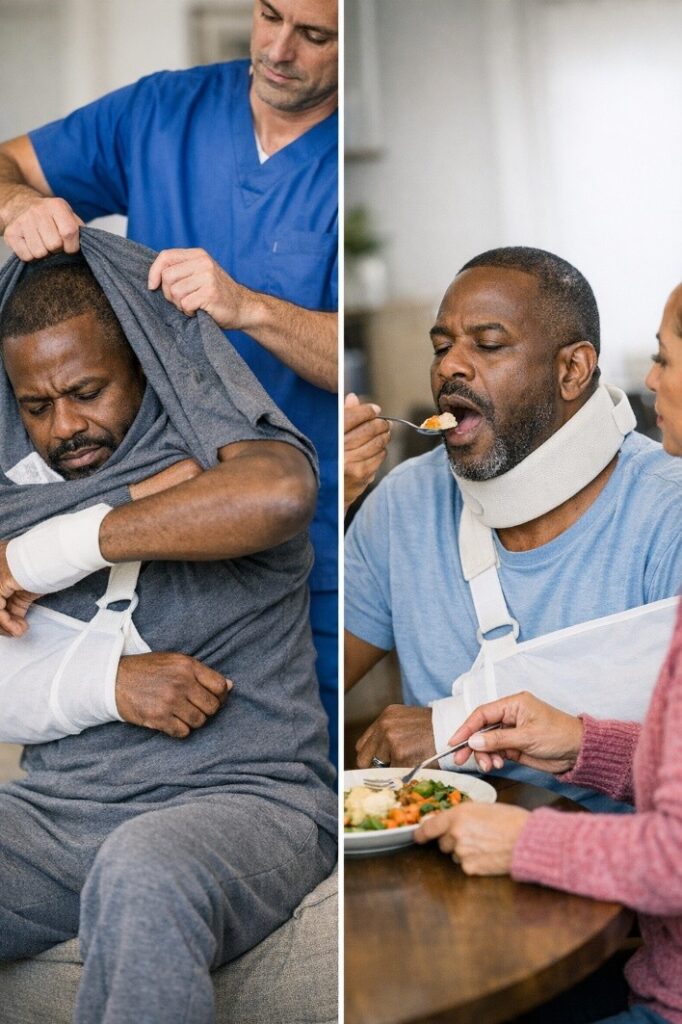
For example, Attendant Care encompasses assistance with eating, bathing, transfers, toileting, mobility, medication reminders, and safety supervision—activities far outside the clinical treatment parameters addressed in ACOEM. Michigan courts have recognized the legitimacy of these services in No‑Fault claims, noting that they are compensable when they are for the injured person’s care, reasonably necessary, incurred, and supported by documentation. [plunkettcooney.com]

Similarly, Residential Rehabilitation (T2033) provides structured cognitive, behavioral, and functional support. These services are essential for many TBI/SCI survivors who cannot live safely without 24/7 oversight. As documented in Michigan PIP litigation, health insurance does not cover these services, and requiring a denial from an insurer that never provides such coverage is an unreasonable barrier and a tactic used by some No‑Fault insurers to delay payment. [electronic…rvices.com]
Misapplying ACOEM to these services creates several dangers:
1. Misrepresentation of Medical Need
When an insurer applies inappropriate guidelines, it falsely portrays necessary care as optional or excessive. In TBI/SCI cases, where cognitive deficits, impulsivity, or impaired judgment pose safety risks, the consequences can be severe.
2. Violation of Statutory Intent
Michigan’s No‑Fault system was designed to ensure lifetime medical and rehabilitative support for catastrophic injury survivors. Using ACOEM to limit non‑medical support services—such as supervision or cueing—undermines the legislative purpose of MCL 500.3107. [electronic…rvices.com]
3. Improper Limitation of Reimbursement
Michigan’s fee schedule statute, MCL 500.3157, regulates reimbursement levels, but it does not convert non‑clinical services into medical treatments subject to ACOEM’s duration limits. Applying medical treatment guidelines to custodial or supportive services is simply incompatible with the statutory framework. [legislature.mi.gov]
4. Increased Litigation and Administrative Waste
Mischaracterization forces providers and families into unnecessary disputes, appeals, and lawsuits—delaying care and burdening an already complex system. Courts have repeatedly addressed issues arising from insurer misrepresentations or unsupported denials within No‑Fault litigation. [kopkalaw.com]
In short and to provide a meaningful summation: ACOEM has no legitimate role in determining the necessity of Attendant Care, Residential Rehabilitation, or long‑term TBI/SCI support services. Misapplication of these guidelines not only distorts clinical reality but also contravenes Michigan’s statutory protections for catastrophically injured individuals.


Another Blog Post by Direct Care Training & Resource Center, Inc. Photos used are designed to complement the written content. They do not imply a relationship with or endorsement by any individual nor entity and may belong to their respective copyright holders.
| Follow us in the Social Stratosphere… | ||||
|